
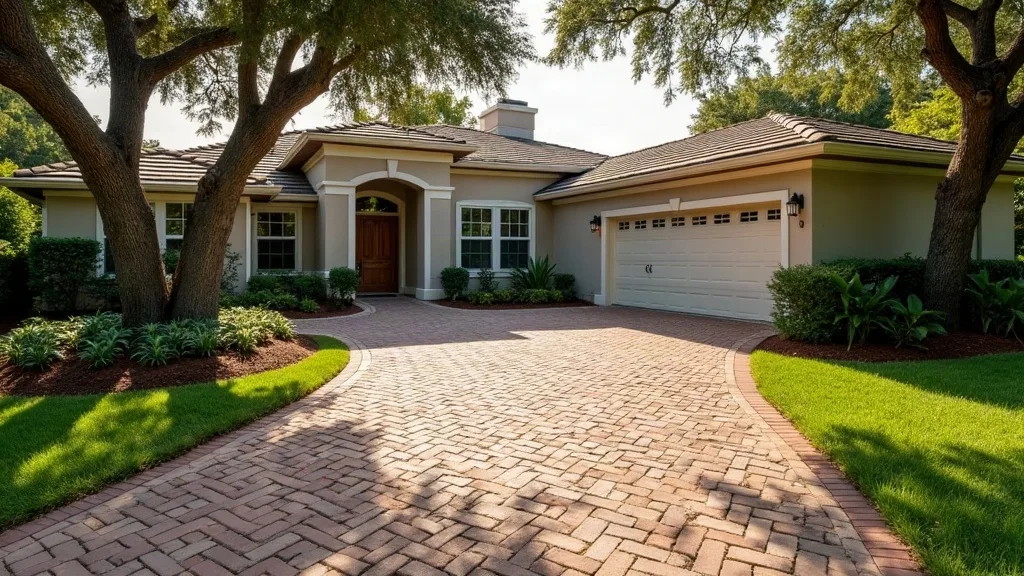
Paver sealing for Orange Park homes
Paver Sealing in Orange Park, FL
Pavers fading in Orange Park? Get local help from Fleming Island Paver Sealing. Call (904) 682-0688
- Brings out deeper paver color
- Fresh joint sand helps lock pavers in place
- Gives weeds less room to grow
- Makes the surface easier to keep clean
- Free estimate, no obligation
Request a Free Estimate
Free, no obligations.
Paver sealing help in Orange Park
Almost a third of Orange Park is water, spread along the St. Johns River and Doctors Lake, and the town sits about 13 feet above sea level, which means river weather has a say in how a paver driveway ages. Picture the walk to your door after a wet September week, with green film under your shoes and a line of washed out sand by the garage. Now picture that same walk clean, with full joints and even color. You can request a quote and a contractor will come look at it in person, free and with no obligation.
This website connects Orange Park homeowners with an independent paver sealing contractor and does not do the work itself. The town holds about 9,089 people in roughly 3,985 housing units, and the Orange Park name also shows up on mail well outside the town limits. A riverfront home near River Road and a house close to Blanding Boulevard face different conditions, so say exactly where you are when you call (904) 682-0688. The contractor then sets a time to measure and give you a price.
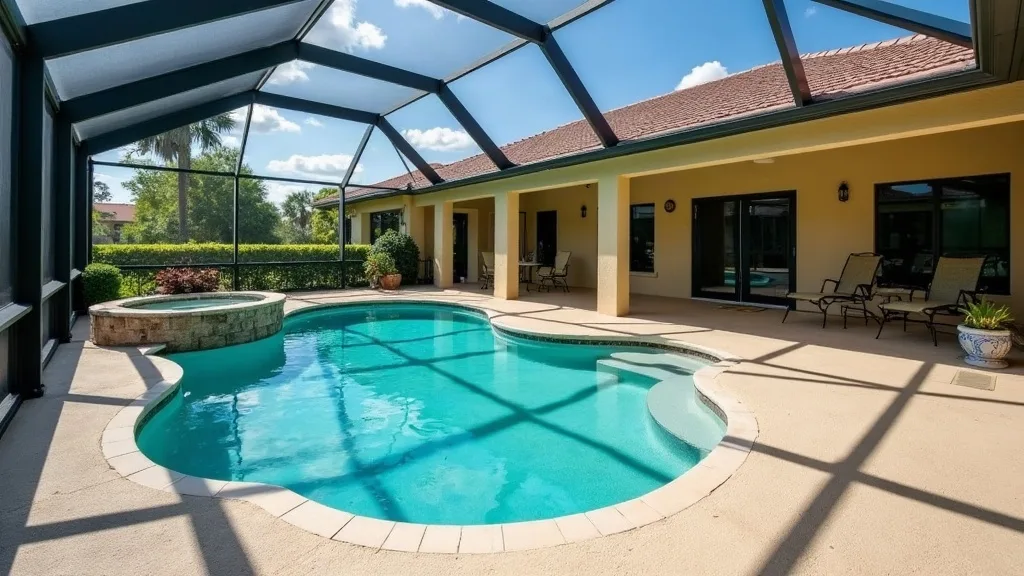
5 common paver problems in Orange Park
Green film under the old Orange Park oaks
River Road is lined with century-old trees and Clarke House Park is full of mature oaks, so deep shade is part of the Orange Park look. Algae thrives in wet spots and can grow faster where shade and poor air flow meet, according to the Royal Horticultural Society. On pavers it shows up as a dark green film that can turn slick after rain. Look for it first on the shaded side of a driveway or under a low limb, because that is where your foot slips first.
Joint sand that leaves with the summer storms
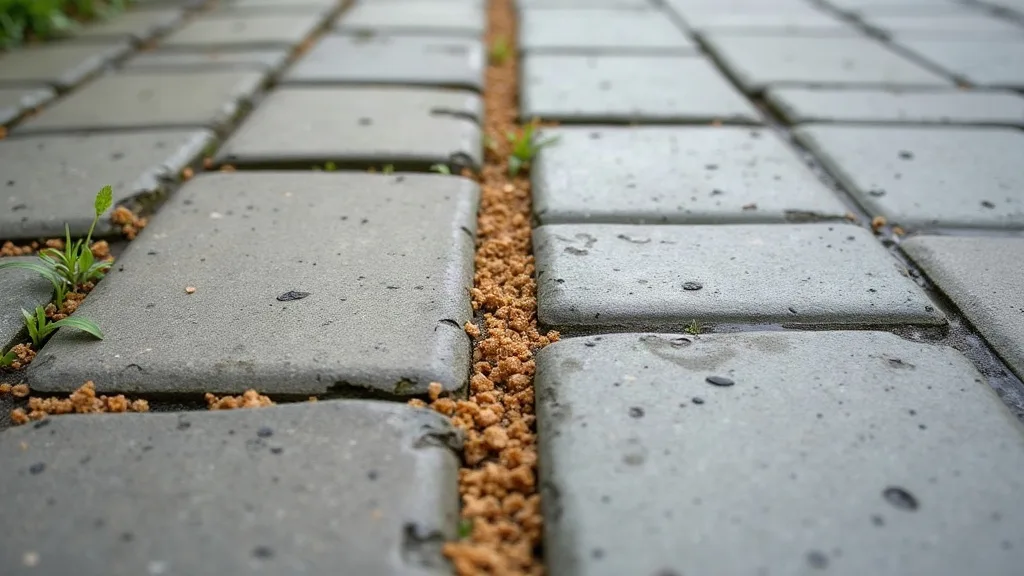
Jacksonville, the closest long running weather record, averages 53.4 inches of rain a year, and about 21 inches of that normally falls from July through September. Hard rain running across pavers can pull loose sand out of the joints, mostly at low edges. A Clay County horticulture agent describes sites here as generally sandy, so grit also gets tracked in and washed around. Once joints open up, pavers lose their support, and weeds or ant piles in the gaps are the warning sign.
River water left behind after a big storm
Hurricane Irma's surge pushed the St. Johns into two Orange Park riverfront condo complexes in 2017, River Oak and The Villas Continental. Doctors Lake is brackish because the river is estuarine, so storm water near the shore can carry more than plain rain. If water has ever crossed your pavers, tell the contractor. Leftover silt has to come out of the surface and joints before anything else goes on.
Old sealer nobody has a record of
Orange Park has been around since 1877, and a home that has passed through several owners can carry a coat that no one remembers. You may see it as a patchy shine or as areas that look darker than the rest. It matters because water-based sealer cannot go over solvent-based sealer. The contractor has to work out what is already there before picking a product.
Shaded pavers that are slow to dry
Sealer needs a dry surface, and an Orange Park summer does not hand you many of those. Normal rainfall climbs from July into September, and pavers under oaks near the water get less sun between showers. A back patio in deep shade may need a longer wait than an open front driveway on the same lot. Plan for the date to move if the weather does, which beats paying for a coat that clouds over.
River Road, Kingsley Avenue and the wider Orange Park address
The River Road Historic District covers about 50 acres where River Road meets Stiles Avenue, and it holds ten historic buildings on the National Register. It runs beside the St. Johns River two to three blocks east of Park Avenue, under trees that have stood for a century. Pavers in this part of Orange Park deal with shade, fallen leaves and river weather all at once. You can request a quote to have a contractor walk the property with you at no charge and with no obligation.
Kingsley Avenue is the old spine of town, with the former rail depot at 727 Kingsley and Clarke House Park at 1039 Kingsley. Many early lots were sold with orange trees already planted, a plan the Great Freeze of 1894 and 1895 brought to an end. Those old lots were not laid out with a paver driveway in mind, which means edges and drainage can change from one house to the next. To ask about your street, call (904) 682-0688 for a free estimate.
Plenty of people with an Orange Park mailing address live outside the town itself. ZIP codes 32065 and 32073 also take in Lakeside, Bellair-Meadowbrook Terrace and Oakleaf Plantation, and Ridgewood and Orange Park South count as part of the greater area. If you belong to a homeowner association, check its rules before you change the look of your pavers. When you request a quote, give your subdivision name along with your ZIP code.
Why Orange Park chooses Fleming Island Paver Sealing
You could call around and compare a long list of companies in Clay County yourself. This site exists so you do not have to. To try it, request a quote.
Free estimate
Tell us what you need in Orange Park and a contractor who works in the area will look at the job and price it.
Local price range
Northeast Florida companies commonly publish $1.50 to $2.50 per square foot for clean, sand and seal, so you know the range going in.
Your choice of finish
Pick a natural matte look or a deeper wet look. The contractor can explain how each one will wear on your surface.
You decide
Get the price in writing and take your time. Nothing moves forward at your Orange Park home until you say so.
Get Your Free Estimate in Orange Park
Tell us about your pavers in Orange Park.
Free, no obligations
Paver sealing pricing in Orange Park
Northeast Florida companies commonly publish $1.50 to $2.50 per square foot to clean, sand and seal, and an Orange Park job can land anywhere in that span. Heavy algae under oaks takes more washing time, and a patio that curves around old tree roots takes more hand work than an open rectangle. Knowing your rough square footage before you call (904) 682-0688 makes that first talk more useful. Measuring from the curb to the garage and across the width is enough for a first number, and that first number costs you nothing.
A surface with an unknown old coat can need more testing and prep, since water-based products cannot sit on top of solvent-based ones, and a surface that took river water may need extra cleaning. A pool deck is priced on its own, so ask whether a slip-resistant additive is included. A simple driveway in full sun with tight joints sits at the other end, and you can request a quote with no obligation to hire anyone.
| Paved area | Typical example | Clean, sand and seal |
|---|---|---|
| 300 sq ft | Small patio or walkway | $450 to $750 |
| 600 sq ft | Two car driveway | $900 to $1,500 |
| 1,000 sq ft | Large driveway or pool deck | $1,500 to $2,500 |
| 1,500 sq ft | Driveway plus pool deck | $2,250 to $3,750 |
Math based on the $1.50 to $2.50 per square foot that Northeast Florida paver companies published as of November 2026. Your contractor sets the actual price after seeing the surface. Repairs, leveling and stripping failed sealer are usually extra.
How a paver sealing job works in Orange Park
Walk the lot and measure
The contractor starts by measuring and looking for shade, low spots and signs of old sealer. On an Orange Park lot close to the river, that includes asking whether storm water has ever reached the pavers. You should hear which product is planned and why. Point out any spot where water stands near the garage, because a low spot usually means the base underneath has washed out, and that gets repaired before sealing.
Wash off growth and silt
A careful wash lifts algae, dirt and any river silt from the surface. Spots under the oaks usually take the longest. The water also pulls sand out of the joints, which is normal and is the reason this is never the final step. Expect a low setting and an angled spray, which means the joints lose less sand and the paver faces stay intact.
Put the joint sand back
Because washing removes joint sand, new sand is swept in before any sealer goes down. Edges along a lawn or a Kingsley Avenue sidewalk get a close look, since a sandy yard and hard rain tend to open gaps there. The surface should look full and even when this step is done. Walk it with the contractor before the coat goes on.
Wait out the damp
Sealer needs a dry surface, so the job pauses until both pavers and joints have dried. From July through September that can mean watching afternoon storms roll in over the St. Johns and moving the date. One sealer maker, Surebond, asks for 24 hours of drying after a wash or rain on most of its products, which means a storm at 4 o'clock can cost you the next day. Waiting beats trapping moisture under the coat.
Seal in the finish you chose
The sealer goes on in the finish you picked. A wet look coat will show scuffs before a matte one does, which is worth thinking about on a driveway where cars turn every day. One St. Augustine company tells customers about 24 hours before walking on it and about 48 before parking on it, so ask for your own numbers before the crew leaves. Companies commonly quote two to five years before the next coat.
Complete paver services in Orange Park
A complete sealing job has three stages. The surface is cleaned to remove algae, dirt and old residue. Fresh sand goes back into the joints, which helps keep pavers locked in place and gives weeds less room to grow. Once everything is dry, a water-based or solvent-based sealer goes on in a matte or wet look finish. To ask about any of these stages, call (904) 682-0688.
Driveways, walkways, patios and pool decks can all be sealed, and each takes different wear. A driveway deals with tires and oil. A pool deck deals with water and foot traffic. Shaded side yards tend to grow algae first. Let the contractor know how each area is used when you request a quote.
Sealer choice matters more than most homeowners expect. Water-based products are low odor and clean up easily, and can later be followed by either type. Solvent-based products typically give a higher gloss but generally have to be followed by solvent-based products. For help deciding, call (904) 682-0688.
Timing matters too. Sealer needs a dry surface, so a contractor will plan around rain and allow drying time after washing. If it has been a few years since your last coat, this is a good time to request a quote.
Questions to ask before you hire
- Which sealer will you use, and does it work with what is already on my pavers?
- Does your price include cleaning, joint sand and any repairs?
- How do you handle rain in the forecast?
- Can you show proof of insurance and any license the work requires?
- What happens if the finish turns cloudy?
- How long should I stay off the pavers once the sealer is down?
- When do you expect it will need another coat?
Why local matters in Orange Park
Orange Park packs different conditions into a small town. A contractor who knows the area can tell deep oak shade on River Road from an open driveway near Blanding Boulevard, and will plan the washing and drying around that. You can request a quote, free and with no obligation, and ask whether they have worked near the river before and what they changed because of it.
Traffic is a real factor here too. Orange Park is known for heavy gridlock on Park Avenue and Blanding Boulevard, and a job with water, sand and sealer has to hit the right window each day. Someone who already drives these roads will plan arrival and equipment around them, which means fewer half days lost to traffic. If timing is your main concern, call (904) 682-0688.
Local memory helps after a storm. A contractor who remembers what Irma did along the riverfront in 2017 will ask better questions about past water on your pavers. Orange Park is also an incorporated town with its own government, so it is fair to ask what applies at your address before work begins. To find out who covers your street, call (904) 682-0688, and the estimate is free.
A winter home venture that became a river town
The Florida Winter Home and Improvement Company founded Orange Park in 1877 on land once called Laurel Grove. Its backers counted on fruit until the Great Freeze of 1894 and 1895 ended the groves. You can still feel that era at Clarke House Park, where the house dates to the early 1900s and the town bought the last 15 acres in 1991. If your own property needs attention, you can request a quote with no obligation.
Moosehaven took its first residents in 1922 at 1700 River Road, and Club Continental began as the Mira Rio winter home, finished in 1923. Town Hall Park and Doctors Lake Park, with its 320 foot fishing pier, keep people outdoors and near the water. Those places share the same river and the same old trees your pavers live with. Call (904) 682-0688 for a free estimate on yours.
Frequently Asked Questions
How much does it cost to seal pavers in Orange Park?
In Orange Park, figure on $1.50 to $2.50 per square foot, the range Northeast Florida companies commonly publish to clean, sand and seal. Your Orange Park price depends on size, how much growth is on the surface and whether an old coat is there. A contractor can give you a real number after seeing it, free and with no obligation.
Can I pressure wash my paver patio in Orange Park?
Yes, if you keep the pressure low and the spray angled. Unilock's care guide calls for a low setting and an angle of 30 degrees or less, since a hard blast can empty the joints. On a shaded River Road patio, plan on sweeping in new sand afterward.
What do professionals use to seal pavers?
The usual tools are a sprayer and a foam roller, with a sealer picked after checking what is already on the surface. A Trident Protects bulletin recommends spraying and then back rolling for most sealers, since extra left to dry can turn cloudy. One Jacksonville company lists a two-part water-based urethane in two coats, so ask your Orange Park contractor what is planned and why.
Can I use Dawn dish soap to clean my Orange Park pavers?
Yes, for light cleaning. Unilock says dish soap, water and a stiff plastic brush can clear the white mineral haze called efflorescence, and a mild detergent can treat mold and mildew. Rinse well with a hose afterward. Thick green film under the oaks may call for a cleaner made for outdoor surfaces.
How often should I reseal pavers near the St. Johns River?
Orange Park homeowners should plan on two to five years between coats, the span companies commonly quote. Shade, rain and traffic can move you toward either end of that span, and a contractor can tell you where your pavers stand.
Can new sealer go over the old coat on my Orange Park driveway?
Only if the products match. Water-based sealer cannot go over solvent-based sealer, so the contractor needs to identify the old coat first. If you have paperwork or remember who did the last job, share that.
My mail says Orange Park but I live in Lakeside. Can I still ask for a quote?
Yes. The Orange Park ZIP codes reach well beyond the town, into Lakeside, Bellair-Meadowbrook Terrace and Oakleaf Plantation. Give your subdivision name and ZIP code so the request reaches a contractor who works there.
What should I do if storm water reached my pavers?
Let the surface dry, then have it looked at before you seal it. Silt can settle into the joints, and joints that lost sand need to be refilled. Mention the storm when you reach out so the contractor can plan for the extra cleaning.